Fresh flowers are a small luxury. With a little care that luxury lasts, and in Jaipur it needs slightly more care than it would elsewhere. Our air is dry for most of the year, hot for a good part of it, and both work against a cut stem. None of what follows is difficult. Almost all of it is about water.
Why cut flowers fade
A cut stem is still alive and still drinking. What ends it is rarely age. It is almost always one of three things.
Air. In the seconds after a stem is cut, air is drawn up into the water channels and forms a small block. The flower then cannot drink, even standing in a full vase.
Bacteria. They multiply in still water, settle on the cut end and seal it over within a day or two.
Heat. Warm, dry air pulls water out through the petals faster than the stem can replace it.
Everything below is aimed at one of those three.
The first ten minutes
Unwrap the flowers as soon as they reach you.
Wash the vase with soap and rinse it properly, even if it looks clean. The faint film left inside by last week's flowers is bacteria, and it gets to work immediately.
Fill with lukewarm water. Lukewarm moves up a stem faster than cold, which is why florists use it. Lilies are the exception — being bulb flowers, they prefer their water cool.
Cut the stems properly
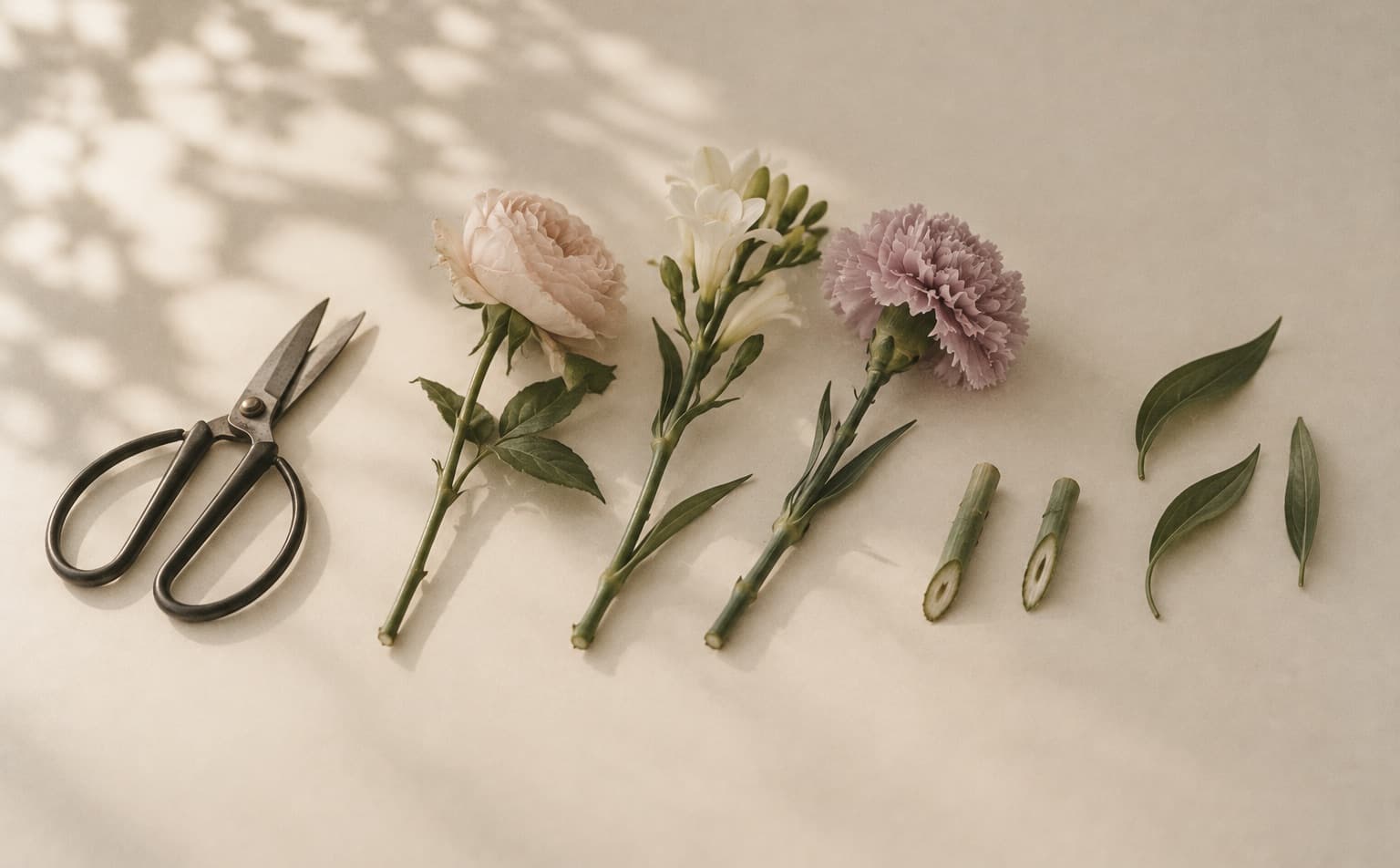
Take two centimetres off each stem at a slant of roughly forty-five degrees. The slant gives the stem more surface to drink from and stops it sealing itself flat against the bottom of the vase.
Use a sharp blade or proper florist's scissors. Blunt kitchen scissors crush the channels they are meant to open.
Cut, then get the stem into water within a few seconds. Better still, cut with the stem end already under water, and no air gets in at all.
Carnations have swollen joints spaced along the stem. Cut between two of them, never through one. The joint is dense and draws poorly.
Do not smash or split woody rose stems. It is an old habit and all it does is create more raw surface for bacteria.
Re-cut every two or three days. It is the step most people skip and the one that makes the most difference.
Strip everything below the waterline
Any leaf sitting in water will soften, rot and cloud the vase within a day. Take those leaves off. Leave the foliage above the rim alone, because it is what makes an arrangement look like a bouquet rather than a bundle of stems.
Change the water more often than feels necessary
Top up daily. Change it completely every two days from November to February, and every single day from April to June. If the water has taken on any colour or any smell, it is already past changing.
Jaipur's tap water is hard. That will not kill a flower on its own, but the dissolved salts help the water go stale faster. If there is an RO tap in the house, use that for the vase.
Where to stand them
Out of direct sun. A west-facing sill in May is not somewhere a flower survives.
Away from the blast of an air conditioner or a fan on full. Moving dry air empties a petal quickly. A desert cooler is kinder, because the humidity it puts into a room is the one thing Jaipur air is short of, but keep the flowers out of its direct stream.
Away from the top of the fridge, which is warmer than it looks. Away from the fruit bowl too. Ripening fruit gives off ethylene, and ethylene ages a flower faster than heat does.
In summer, move the vase to the coolest room in the house overnight. A few hours of cool every night can add two or three days.
Flower by flower
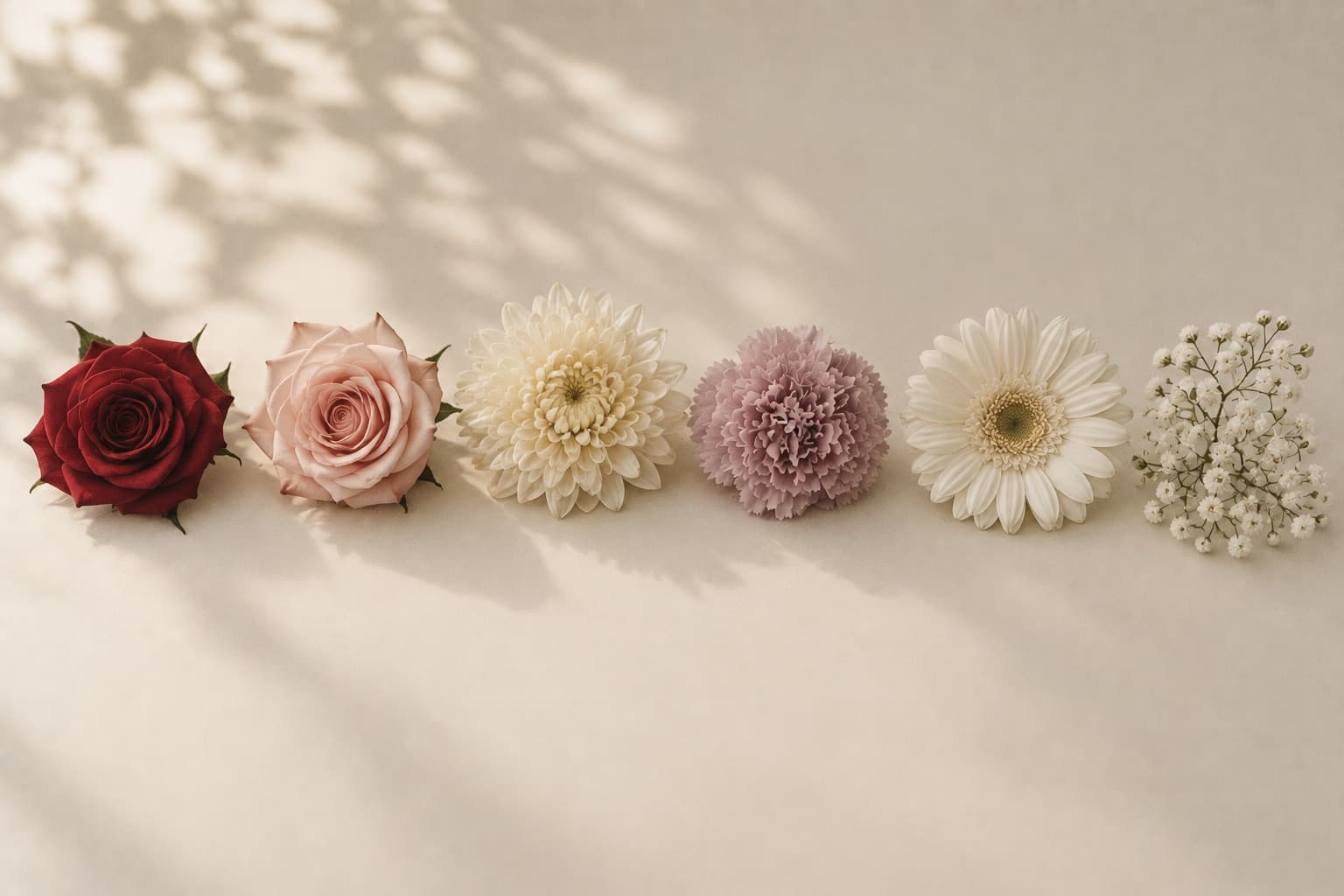
Roses drink heavily. Fresh cut every other day, deep water, and pull off any outer petals that have gone papery. Those are guard petals. They are meant to be removed, and the flower opens better once they are gone.
Gerberas have soft hollow stems that turn to pulp in deep water. Four or five centimetres is enough. If a head bends at the neck, that is usually an air block rather than the end.
Chrysanthemums are the most forgiving flower in the market. Give them clean water and they will outlast everything else in the vase, often by a week.
Lilies open bud by bud, so a stem bought closed gives you the longest run. As each flower opens, pinch out the rust-coloured anthers. The pollen stains cloth and skin badly, and the bloom lasts longer without them.
Carnations last a fortnight with almost no attention. They are the quiet workhorse of a box arrangement.
Gypsophila, solidago and statice barely need help at all. Statice will dry where it stands, and can be kept long after the rest has gone.
Tuberose opens along the spike from the bottom upward. Trim the very tip of the spike and it will carry on opening.
Marigold is a garland flower rather than a vase flower. Keep it out of the sun, mist it lightly, and expect two or three good days.
Reviving a rose that has drooped at the neck
Cut three or four centimetres off the stem, under water if you can manage it. Stand it in lukewarm water. Wrap the head and the neck loosely in damp newspaper and leave it somewhere cool and dark for an hour.
If the cause was an air block, the neck firms up and the rose comes back. If the neck has already gone brown and soft, it will not, and no remedy will change that.
Looking after a flower box
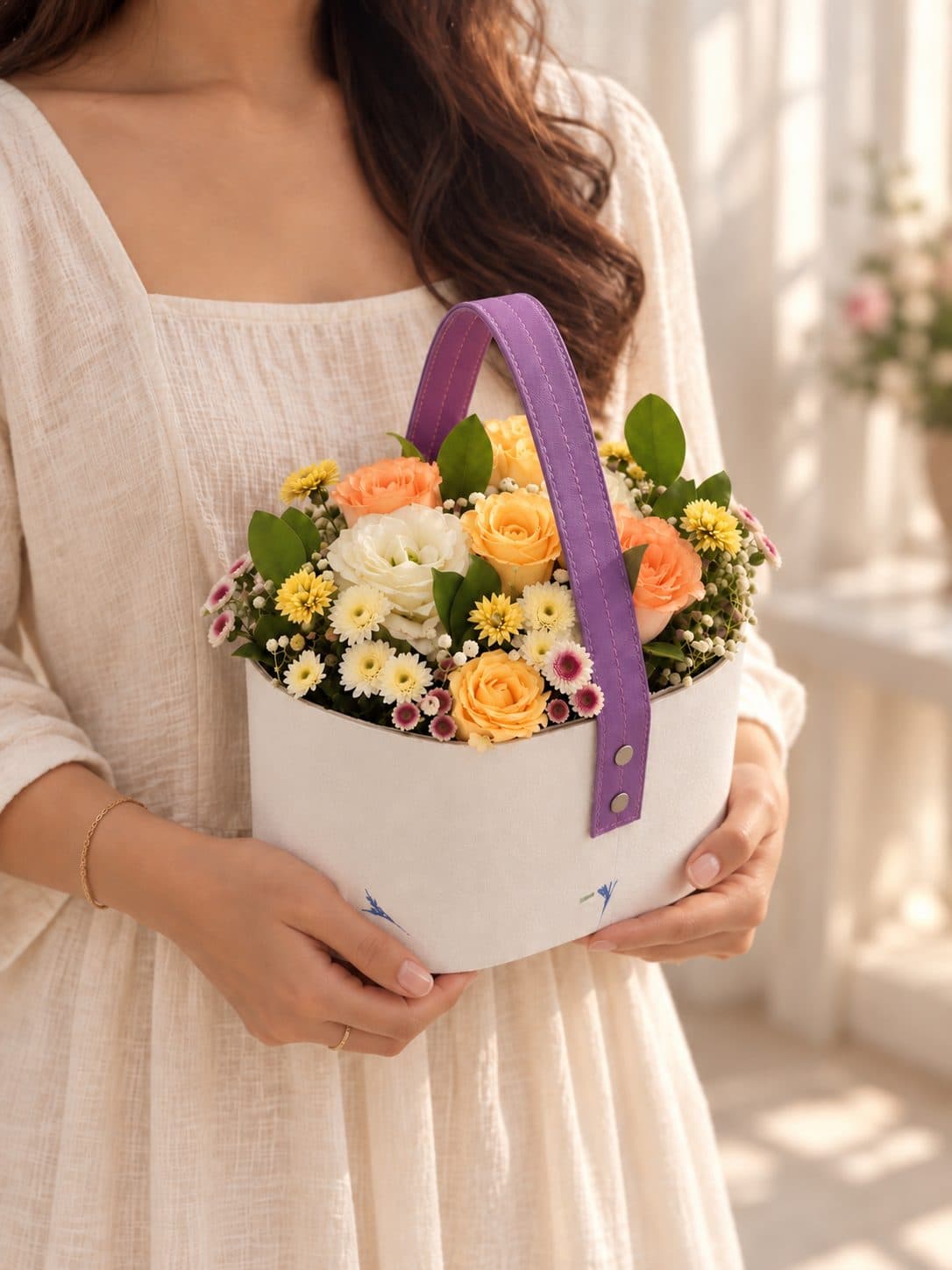
A box arrangement usually lasts longer than a loose bunch, because the stems sit in a fixed water source and cannot be knocked out of it.
If the stems are set in floral foam, pour a little water in at the edge each day until the foam is damp all the way through. Do not flood it. The box is handmade paper and it is lined, but it is not a bucket.
Wipe any drips off the outside. Pull blooms out as they fade rather than leaving them in place, because a dying flower releases ethylene and takes its neighbours with it.
The remedies that do not work
An aspirin. A copper coin. A splash of lemonade.
Sugar on its own is worse than nothing. It feeds the flower a little and the bacteria a great deal.
A proper sachet of flower food contains three things: sugar to feed, an acidifier to help the stem draw water, and a small biocide to keep that water clean. If you do not have one, clean water changed often will beat any kitchen remedy.
When your flowers arrive
An order placed between 6:00 AM and 2:00 PM is delivered by 6:00 PM the same day. An order placed between 2:00 PM and 6:00 AM is delivered by 12:00 noon the next day. Delivery is free across thirty Jaipur pincodes, 302001 to 302039.
If nobody will be at home, ask for the box to be left in shade. An hour in an open stairwell in October costs a flower more than two days in a vase.
Give them clean water, a cool corner and a fresh cut every other day, and they will go on saying what you wanted them to say for as long as they can.